
We still remember, we who dwell
In this far land beneath the trees,
The starlight on the Western Seas.
In The Lord of the Rings, this fragment of verse—overheard by the hero of the book, being sung by Elves passing through—speaks deeply to exile and the longing for home. Displaced from their beloved home in Valinor, Elves nonetheless recall it with love and longing, and their journey from—and eventually to—this place of deep meaning for them encompasses all that they do in Middle Earth.
Apropos, for I have been thinking a lot of exile lately.
Exile can mean many things. It can be punishment: the banishing of an individual away from their homeland in response to crime or conviction. It can occur as a matter of circumstance through the displacement of people and people-groups. It can be other-imposed; it can be self-imposed; it can emerge as a matter of generational consequence. It can sometimes be several of these things at once.
To me, exile in general simply means absent from home.
And not just absent from home but being conscious of being absent from home: that is, to recognize that where you are right now is not home, that you are a sojourner, that your location is waypoint, not endpoint. To be in exile is to carry the memory of home with you, to forever be remembering and hearkening back to where you really belong, the place from which you are from and that is in some sense for you in a way that no other place is or can be,
The theme of exile is central to Scripture. Israel’s people live in exile: God instructs them to build houses and grow fruit and build families in their exile (Jeremiah 29:4-7) which gives a sense that individuals and families and generations can be established purposefully in a land or a place and yet still remain in exile from it. Daniel maintains his faith despite exile. Biblical historians tell us John was likely exiled on Patmos.
I used to find the concept of exile something of an objectionable state. Being home is the point. Exile is just what happens in-between, the painful part of the journey that is supposed to grow you and make you better but is also not anywhere near preferable to being where you belong.
But now, I wonder. Now, embracing exile may be exactly what I—what many of us—need.
I’ll be honest: it’s been a rough run. Political and cultural circumstances confound me. I feel out of step in so many ways with the predominant culture—and, in some ways, with the predominant church culture. I am out of step with colleagues and friends who tell me, about work and each other, that I care too much, that I shouldn’t give my best, that I try too hard, that I’ll succumb to cynicism and apathy if I know what’s good for me.
I found this vexing until, all of a sudden, I didn’t.
I don’t know when and why the change happened. I just know that, suddenly, exile didn’t seem so terrible. It can be a beautiful thing, to be in a place and not of it. It can be transformative. Yes, it can mean being a lightning rod. But it can mean making a difference, standing out because something about you—inside you—is so deeply, fundamentally different.
It is easy to forget we don’t belong here.
When you traffic long enough in what the world values, what our culture values—the worship of the individual, the elevation of the self, power, money, material gain, influence—you start to believe that those cultural values should be your priorities, too. You can cloak them in Christian language and rhetoric, but there’s no hiding what they are. You can become comfortable wherever you are living. You can forget you were ever from anywhere else.
To be in exile is to be oddly, calmly, naturally out-of-step with the customs of the place where you are. It doesn’t mean making a big scene or performing your faith in such a way that it becomes false, just another narrative or identity that suits the moment. It doesn’t mean throwing rocks at people, asking why they don’t join you. It means trusting that who you are in your exile will invite curiosity. Questions. Sometimes conflict. Sometimes irritation. And sometimes a miracle.
To be in exile means making a home and doing what people do, without sacrificing the memory of where you came from or to where you’ll return. It means giving a place and a people to whom you do not belong your best and your all, while keeping your heart turned homeward. It means carrying the memory, the knowledge of who you are, and keeping that flame banked and burning as the years and years stretch on.
Recently, a colleague gave me a thoughtful look during a video call. “Open for advice?”
I said, “Always.”
He considered. “Don’t take this the wrong way.” (There is no worse way to start off a piece of advice, by the way). “I appreciate how hopeful and sincere and engaged you are. It’s rare. And it’s special. But…”
“But?”
He gave me a rueful look. “You’re going to need to let some of that go. Or you’re just going to be hurt or disappointed all the time.” He named a recent event, where a colleague had gone back on their word and torpedoed something I cared about. “That stuff happens all the time here. You have to just…expect it from people.”
What I told him was: I’m not naïve. I do expect that from people. I do know that this kind of stuff happens all the time here and in the world and everywhere. I know that it is easier, and perhaps customary here, to grow cynical or indifferent and just cash the paycheck.
But just because that’s the way it is here doesn’t mean I have to change who I am or what I do.
This is what it means to live in exile. No, I can’t count the times lately I’ve picked up a newspaper or looked up at work or heard a proclaimed believer speak only to lift up my head and think, what? Where am I even at? How have I found myself here? How am I supposed to respond to this? Nothing about any of this makes any sense. It’s not what I know. It’s not where I’m from. But if I embrace exile, I look around and can say, It doesn’t matter. I know where I am from. I know where I am going. And I know what I am asked to do.
It’s not better than being where we belong.
But it’s better by far than becoming a part of what I know I must resist.
Long live those in exile. May we establish ourselves, grow, and behave as those who have come here from somewhere else. May we transform wherever we find ourselves, by the grace of God and for His glory.
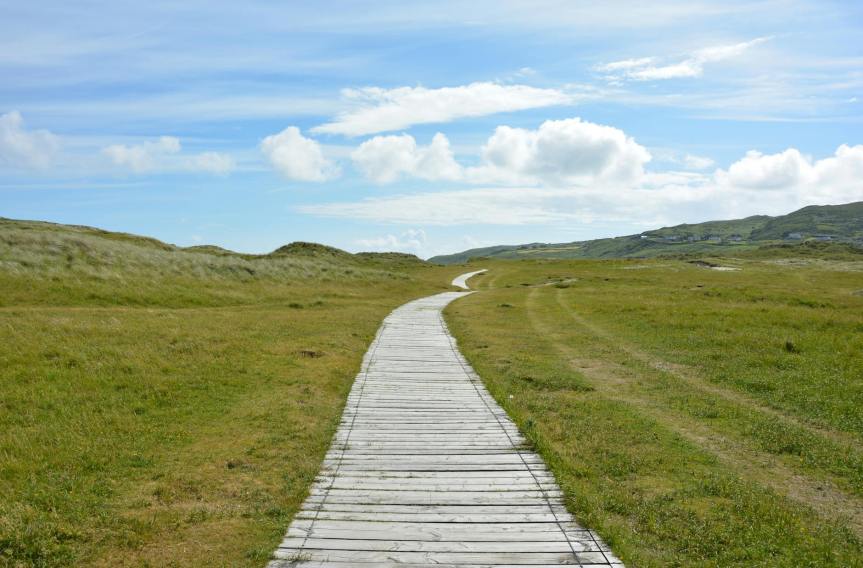
May we keep walking the long road home.


The depth of your insight is inspiring. This post has reignited my passion for deepening my spiritual practice!
LikeLiked by 1 person