
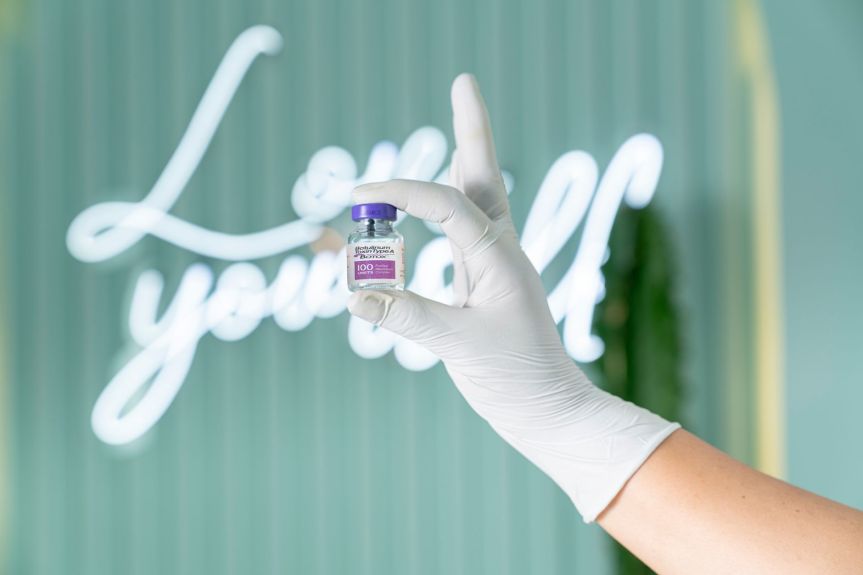
“She looks so beautiful,” my colleague murmured, as another colleague of ours presented her initiative. “Isn’t she just gorgeous?”
I shifted uneasily in my seat. As a general rule, I find it wildly inappropriate to comment in any way on colleagues’ appearances at work.
“She looks so young,” someone else whispered in fascination.
Of course she does, I thought wearily. Because she gets chemical peels and Botox and fillers. I knew this because the colleague in question had told me. More specifically, she called me panicking when she was called into an unexpected campus meeting post-peel and needed me to tell her that her face wasn’t too raw or red for public consumption. When she sheepishly reeled off the list of work she had done regularly, I was astonished.
If you are my age, particularly in a professional environment, you can’t avoid it: the mention of these things, or the discussions about them. Half my colleagues Botox regularly, with smoother foreheads and faces in their fifties and sixties than I have in my almost-mid-forties. They experiment with filler, laser work, and chemical peels. Two of my colleagues got their breasts done. One individual I know left work for a sabbatical, got on Ozempic, got fillers and Botox, and came back looking like an entirely different person.
And I’ve been musing, as a Christian, on all of this for a while.
To be clear, though I’ve used my work colleagues as examples, this is happening in churches, too. Indeed, in some cases and in some areas I’d say it’s happening more in churches. I can spot Botox and lip filler a mile away, and frequent overuse of these procedures results in certain characteristics it’s impossible not to notice. These women are in the pews, not just the workplace, and I think it’s rather worth thinking through the spiritual implications of all this.
Full disclosure: I’ve never had a more involved cosmetic procedure than a manicure in the past decade. This is purposeful; I’ve committed to myself not to get cosmetic work done to my body. Ornamentation is fine, of course—I love me some good fingernails and I live for makeup. I’m also okay with efforts to preserve what I’ve got: I have a lot of lotions and potions to hand. But when it comes to altering my actual face—removing wrinkles, getting anything “fixed,” resurfacing my skin, or similar—I’ve opted out.
But that doesn’t mean I’m immune to the pressures, in the Christian community or outside it.
I’d be lying if I said I didn’t notice the “reading wrinkles” I have developing. My skin appears to be entering a new phase daily: blotchy today, dry tomorrow, oily next week. Recently, I caught sight of myself in a mirror when I was pushing back my dark hair and was staggered to notice a significant little fox-tail streak of gray. The eye bags are getting baggier. The blotches are getting blotchier.
A friend of mine, past menopause, told me wryly that there are two things no woman expects about getting old. “The first,” she said dryly, “is that one night will be the last night of good sleep you ever have. Ever. The second is that people lie about what old age looks like. You think it’s wrinkles and grays. It’s not. It’s when you start waking up and wondering why you look so tired all the time. That’s it. That’s old!”
I was raised in a curious Christian milieu in terms of physical appearance. On the one hand, I learned growing up that vanity was a sin and beauty fades, and my mother was a walking talking embodiment of that perspective. She wore makeup when I was young, but later abjured it except for a dash of mascara on “church nights.” She cut her long dark hair into a short and serviceable bob and shrugged off her perpetual flyaway cowlick. She wasn’t interested in clothes that flattered her, only in what was comfortable, and thusly became famous in our town for wearing sack dresses with Crocs.
I was a mystery to her: a daughter who loved makeup of all kinds, wanted to experiment with eyeliner, and had to be told in middle school I was only allowed to wear chapstick. She rolled her eyes at my dark-gray-eyeshadow phase, my let-me-try-peach-blush phase, and fretted over me wasting money on various skin care lines.
And yet.
In the complementarian world in which I was raised, the woman’s role was to be of service to both household and husband. Part of being in service to your husband meant being alluring and available, and being alluring meant—well, among other things, not getting fat and always looking “kept up.” My mother expressed abject horror when she learned that I sometimes spent an entire weekend day in pajamas, worried when I gained weight, encouraged me not to “let myself go.” The implicit and unspoken assertion, always, was that women who didn’t look their best deserved the affairs their husbands had.
I don’t blame my mom. She was raised in a certain generation and a certain milieu. But wow, does that way of thinking do a number on a woman’s psyche.
That’s why, I suppose, I don’t shame or feel tempted to shame my colleagues or congregants who show up with suspiciously smooth brows. I understand the pressures. And I mourn them. I understand very well that for all the Bible tells us what our value is, the world—and sometimes even the church—says, “yes, sure, but don’t let yourself go.” I see the way overweight women are treated in their own congregations. I see the way older women become invisible in public. I understand that in our hyperculture, “don’t let yourself go” has moved from “slap on some makeup and decent clothes” to “attack signs of aging the moment they appear and maintain the facade of perpetual youth.”
And this doesn’t touch the pressure that very young women and even girls are facing thanks to social media. Eating disorders, body dysmorphia, and cratering self-image are growing more commonplace as the youngest among us find themselves relentlessly exposed to ideas of “beauty” on social media and faces that no longer show signs of meaningful age. Our women and children are saturated with exposure to faces and ideals that don’t always align with the values we like to teach–and they are so prevalent we don’t even notice them.
We talk to women, in the church, about a lot of things. We talk about purity, and chastity, and modesty, we talk about the Proverbs 31 woman. We talk about sex and relationships and marriage. But I wish we also talked about beauty, and self-image, and God-given confidence: not the sort that comes from false reliance on external ideals, and not what manifests as arrogance or pride, but the centeredness that comes of knowing who you are and what you’re here to do. I wish we talked about what we’ll encounter as we grow up and grow older. I wish we talked about what Biblical beauty was and what it isn’t, and what it means to take care of the body that is the temple of God while also not perpetuating the idea that women who don’t look a certain way deserve marital infidelity.
When I was in my early teens—when the skin was still without wrinkles! when the eyebags did not exist! – my mom asked me casually one day, in the car, how I felt about plastic surgery. I don’t remember what I said. But I remember that she asked me what I would want for my older self. “One day you’ll start looking a little older,” she said. “And you might have the money or means to get a facelift or something like that. What would you tell your older self to do?”
I thought about it. “I’d tell her you don’t need that,” I said earnestly. “Because God loves you like you are, and so do Mom and Dad, and if you’re married your husband better love you like that too. So, I mean, why?”
Every time I start wondering if it would be worth it to erase the lines on my forehead, and every time one of my colleagues talks about getting fillers like they’re buying oranges at the store, I remember that young me. I think that what she said is right and true. Her words determined my commitment to my current approach. I remember that,and I go about my life.
I’m not saying that I expect other women to make the same decision. I’m not here to articulate a theological stance on the use of Botox. I’m just saying that what I wish is that more of us had a fighting chance to articulate our values early on and to find them supported and encouraged—to make that decision before it matters. Because it ain’t easy out here.

