
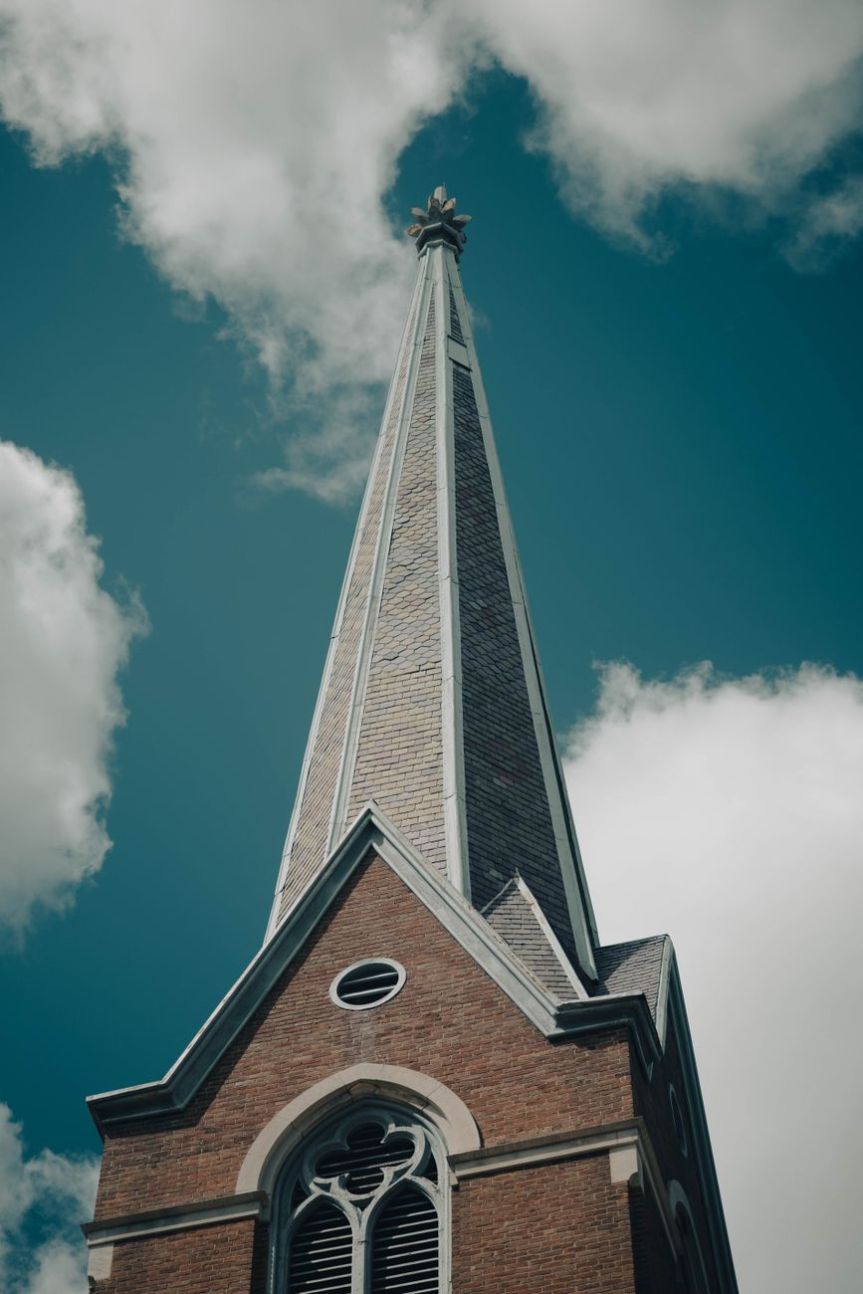
“Thinking about your boyfriend again?” my husband asks.
I laugh. I can laugh because his question isn’t about a person at all. It’s about a church.
We have been, for many long years now, what I might call denominationally-challenged. Long ago, we both elected to leave the Southern Baptist denomination that we had been a part of since my birth and his salvation. We felt called by God to do so, and much since has occurred to confirm and to justify that call.
The breakup, if one might call it that, was painful. But we persevered, landing at a local church in another denomination. The denomination we left and the new one we entered had some second-order theological differences but were close enough in spirit and approach to feel comfortable. Perhaps, we thought, this is the one.
We spent over five years there, persevering through the COVID-19 pandemic, only to realize that despite doing all the right things and saying all the right things and volunteering for all the right things (intro-to-church courses, service events, weekly services, small groups), we remained ancillary to that body for reasons I find bewildering to this day. Prayer requests went unacknowledged; phone calls went unanswered; people simply forgot us.
Persevering at that church in spite of it all, we sampled other options. One congregation we loved was marvelous and welcoming, following up with us weeks after we attended a wedding there and got to know some of the members, but was so far from our home that anything beyond attending a weekly service was a logistical impossibility. Another congregation was close to home and non-denominational, but as such seemed to adhere to no orthodoxy in any form whatsoever. Another church looked promising, but everything outside of the bare-bones services met during working hours for both of us.
And then we found the church that my husband jokingly refers to as my “boyfriend.”
I wonder: what is the sort of church you dream about? The sort of church you’d invent yourself if you could? I suspect everyone has one, even if we’re perfectly happy at our current church. Indeed, our current churches often have some component of what we long for in our ideal, if-I-could-build-it church. Is it a setting that appeals to you: a cathedral, the plain dusty bones of a small New England building, the forest floor? Is it a certain sort of worship: the contemporary guitar setup of your dreams, choral glories, the melodies of international praise? Is it the intellectual aspect of the tradition to which the church belongs? The theological stances? The preaching style? The service opportunities? The warmth and inclusiveness of the people, the sense of close-knit community? Is it a church you attended once in the past, or an echo of something similar? A home to which you long to return?
I never used to meditate on this much, but when we found the boyfriend church it was like being struck by lightning. It felt right—clicked—in ways no church has ever clicked, ticking boxes in my heart I didn’t even know were there.
And yet.
Boyfriends don’t always work out. Sometimes for obvious reasons: he’s a jerk, he cheats, he drinks all the time. But sometimes the incompatibilities are less obvious: the sorts of issues that maybe could be worked out, but where gulfs of understanding are so vast as to make it seem almost impossible, and where commitment even to someone you love seems too big of an ask on such tremulous ground.
And so with the boyfriend church. That church called to me in so many ways, but theological complexities (not a lack of orthodoxy on first order/creedal matters, to be clear, but rather theological matters of significant difference) and what commitment requires made a permanent relationship seem unmanageable. My husband and I walked away uncertain enough to believe this was not quite right; even so, that night, I cried into my pillow as hard as I had any night since my mother had died. I grieved, in a way I never imagined I would grieve, for a church I had never joined but didn’t want to leave.
I read, often, gentle admonishments that believers don’t think about church the right way.
We ask too much of it. We come to the house of God as consumers, rather than asking what we can give. We expect perfection from a body of believers when we know it is only found in Christ. We’re too picky. We’re unwilling to commit. We’re selfish. We want too much.
To this, I hear, the answer is always commitment: a willingness to settle into an imperfect place. I don’t necessarily believe this is wrong. Being in church, being part of a community, helps to sanctify us. Being part of a body of imperfect believers teaches us to forgive, and offer grace, and turn the other cheek.
But I wonder, then and now, what imperfections I ought to settle for. I don’t doubt that selecting a church or a denomination means compromise, but what I do wonder is where I ought to compromise if compromise is inevitable. Attend the perfectly theologically-aligned church where the body barely engages, hardly speaks, and service functions more as a socialization hour? Attend the church where everything is mostly theologically simpatico but make peace with being invisible? Find everything I want but with a heavy dose of uneasy theological complexity?
I still don’t know what the answer is. Maybe there isn’t one. Maybe I want an excuse to attend the church that still haunts me.
All I do know for sure is that the need for us to be part of a body, any body, while we look for the right church remains critical. So we have found what my husband jokingly refers to as “the serviceable spouse” church. That one’s good enough, and we make do with what doesn’t work, and we thank God there’s a safe place to land.
And who knows? Maybe that’s what true church love will look like, in the end.
Maybe, a tiny voice says, we’re still meant for that old boyfriend.
I’m not pressing for answers. In the meantime, I take heart that it still matters so much to us. If I cared less, I suppose I’d feel comfortable settling down in any old spot. But my faith matters to me, and the community where I choose to live it out matters to me, and I believe that if we keep our hearts and eyes open in honest openness God will speak to us about where we’re meant to be.
In the meantime, we wait in hope, and know God will use even the waiting to make us who He wants us to be.

