
My mother’s father was not a kind man.
I never knew him. He died the year before I was born: a great relief to my mother, who had suffered at his hands for the entirety of her childhood and teenage years before escaping to a couple of years of college and then to marriage.
No one hinted of it his nature to me for a long time. I saw him sometimes in photographs, old family pictures, knew enough to know he was my mother’s father, had served in the military, had later served on the police force. Had fathered five children. He had given some generous gifts, had a sense of humor, that lived on in family legend.
So, too, did his monstrosities.
He was an abuser. I say plainly what my mother and aunts could not, though they spoke of it in hushed voices together. He beat them; he sexually abused them; he shot at my aunt and broke her arm; he terrified them.
I learned the truth in drips and drabs. First, I heard the dark family jokes around the beatings and the shooting and a thousand other violent incidents. I saw the scars; I realize the jokes weren’t jokes at all but a dark way of coping with a terrible truth. Once, on a foray through family papers, I saw the newspaper clippings my grandmother saved: a listing of his alcoholic sins, of accidents and public misbehavior, arrests, community chaos.
Later, when my mother would sometimes mention that she wouldn’t have left me alone with him and I asked why, she gave me a long look. “I’ll tell you,” she promised, “when you’re old enough to understand.” And she did.
I decided it was best he was dead.
But all this information did have theological ramifications. It was one night over an ice cream sundae that I dared to ask her the question I wondered aloud: “Is Grandpa in hell?”
I assumed he’d have to be. I assumed he’d never repented of what he’d done. Despite understanding the concept of God’s limitless grace I wasn’t altogether certain it was possible to repent of what he’d done.
But Mom was not surprised I’d asked. She told me that, after she’d gotten married, the abuse had stopped. He had apologized to her, some years later. And after she had come to be a Christian, they started writing back and forth about God. My grandfather was a lapsed Catholic from a family of Catholics; he certainly knew who God was, understood Christ. Whether he believed, or felt the need to turn away from his behavior, was another matter entirely. Convicted to pray for his soul, my mother shared that she sent him Bible verses, encouraged him to repent and to return to God, prayed for him consistently.
“And?” I asked. “Did he become a Christian?”
My mother paused. “I don’t know,” she finally said.
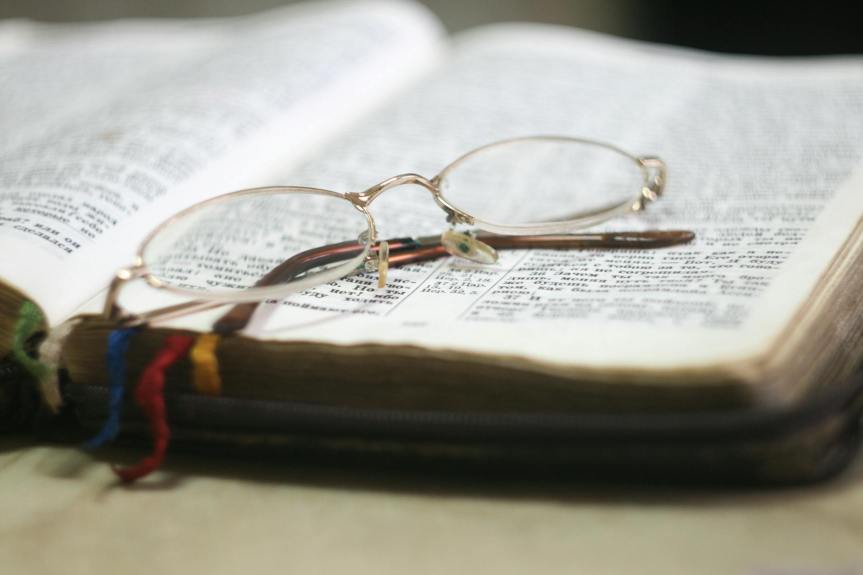
He died the day after she sent him a letter outlining the path to salvation in clear and concise text. A sudden aneurysm: he hit the floor and was gone before the ambulance arrived. But when my mother got back home, she found her recent letter and a bookmark tucked into the open Bible by his bed. He had been looking up the verses.
I think about him, sometimes. And about the thief on the cross. I like to think my grandfather repented, at the end. The evidence was there that he could have. And certainly, God can do very much with very little. But I suppose it’s just as possible that he entertained the notion and dismissed it for another day that would never come. Read the verses and thought, eh.
The Catholic practice of praying for the dead has always been associated with the concept of purgatory. But for years I have prayed for my grandfather (despite his being long dead) not out of fidelity to the concept of purgatory but simply because of this:
God exists beyond space and beyond time, so my prayers now—that God would soften my grandfather’s heart, would bless my mother with the salvation of a seemingly irredeemable father—would have been known to God even before I was born, as I was known to him before I was born. Would have been known to God even as my grandfather bent over that Bible, long before I came to be. So perhaps in some way my prayers now mingle with the prayers my mother prayed then, and her siblings, and my grandmother.
Certainly, there is nothing to lose with such a prayer.
And what we have to gain, I imagine we cannot fully grasp. I struggle to forgive my grandfather having never met him. And yet my mother did, despite having suffered at his hands. This was the grace and mercy of God made evident in her life. I wonder what fruit it might produce. I have no way of knowing, this side of heaven. I do know that despite what she endured my mother’s life was full and rich and replete with the favor of God. I know she was satisfied she had, with her father, proceeded the way Gpd had desired.
And the one thing I do have is a box. I found it in her closet, after she died. I found three items therein: the articles and arrest records my grandmother had compiled on my grandfather (a really incredible record of alcoholism and sin by itself), the letters my mother had written her father about Jesus that she gathered up from his study after his death, and her father’s St. Christopher medal hanging from a broken chain.
And isn’t that box, in some way, a measure of the path we all must take? The record of our sins written out and made manifest, the knowledge of God made clear to us, the merciful embrace offered in loving hope. In that box, a staggering truth reduced down to its bare elements: even now, you may yet be saved. A shocking reminder that we are not beyond redemption.
I cannot choose for my grandfather, and I’ll never know what he chose. I am left here simply to marvel at the mystery of mercy, to pray, and to choose for myself.


Beautifully written, thanks for sharing. No one is beyond redemption when it comes to God.
LikeLike
Too true! Thank you for the kind words.
LikeLiked by 1 person
Your story is healtfelt and relatable.😔 Heaven will be full of surprises! Thanks for sharing.
LikeLiked by 1 person